Writing / Local AI ·
Driving Photoshop from a model that never leaves the building
Qookin turns a brief into an editable Photoshop, After Effects or Blender project, using models on a local DGX Spark. Here is what our evidence runs show.
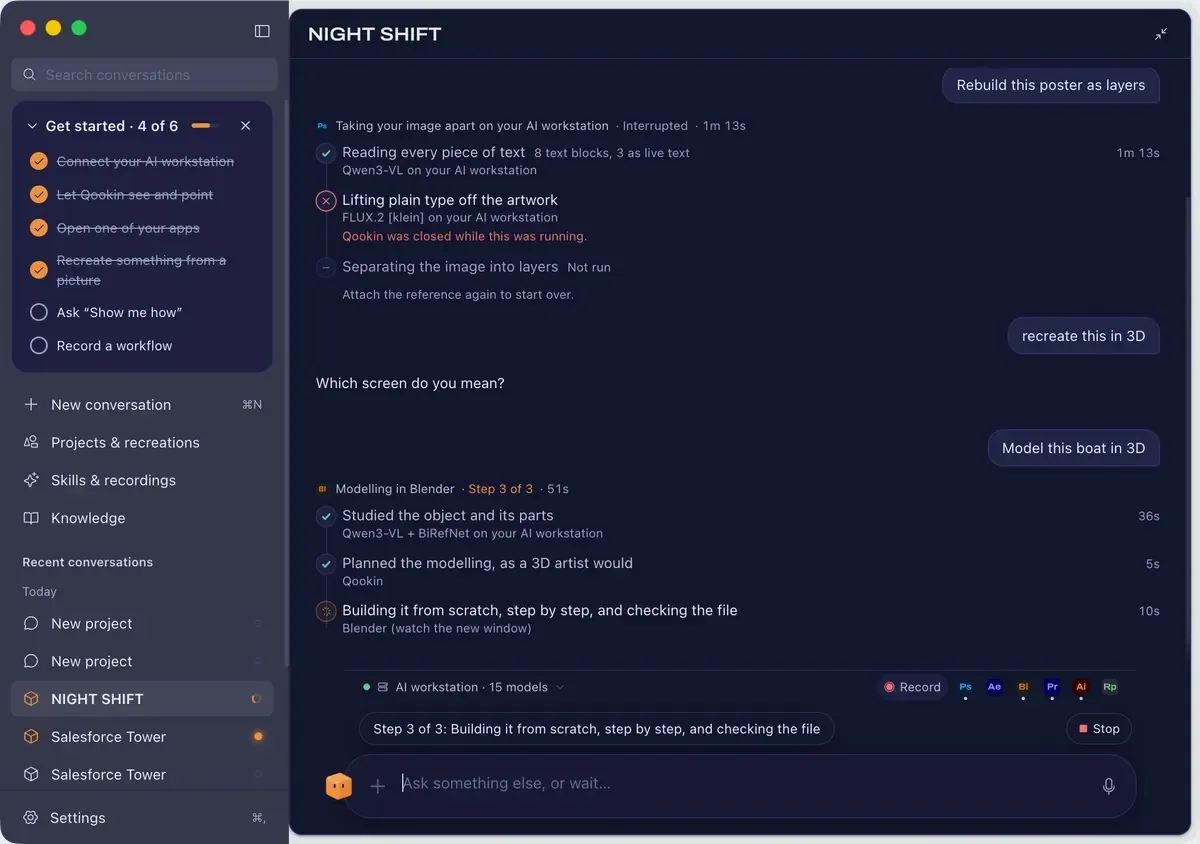
Most image models hand you a flat picture. A designer then rebuilds it by hand so the type can be edited, the layers moved and the client’s changes made. Qookin’s output is the native project instead: live text, vector shapes, separate image layers, masks and keyframes, in the application the designer already uses.
poster.png · 1 flat layerposter.psd · 4 editable layers
Summer
Its models run on hardware the studio owns: an NVIDIA DGX Spark or Dell Pro Max with GB10 on the local network. Cloud models are an option a person turns on per capability, with their own key. Every run below used only the local machine and the Mac.
What works today
Every line below has a recorded evidence run in the repository:
| Capability | Evidence |
|---|---|
| Brief → three concepts → a person chooses → approval → verified native Photoshop document | 31/31 checks, 99.99% of pixels within tolerance, 87 s |
| Native Photoshop title cards (text, vector shapes, masked smart objects, groups) | 196/196 checks |
| After Effects motion with native keyframes and track mattes, checked frame by frame against a reference | 239/239 checks |
| The same scenes compiled to Blender with the exact font | 193/194 (one failure, recorded below) |
| A flattened image rebuilt as editable layers | 36/36 checks |
| Local inference: FLUX.2-klein-4B 1024² images in about 4.2 s warm, Qwen3-VL-8B checks in about 10 s warm | median of 9 and 4 warm runs, offline, from pinned and checksummed weights |
| Image generation in a Docker container with networking switched off | outbound connections fail; warm image in 3.88 s |
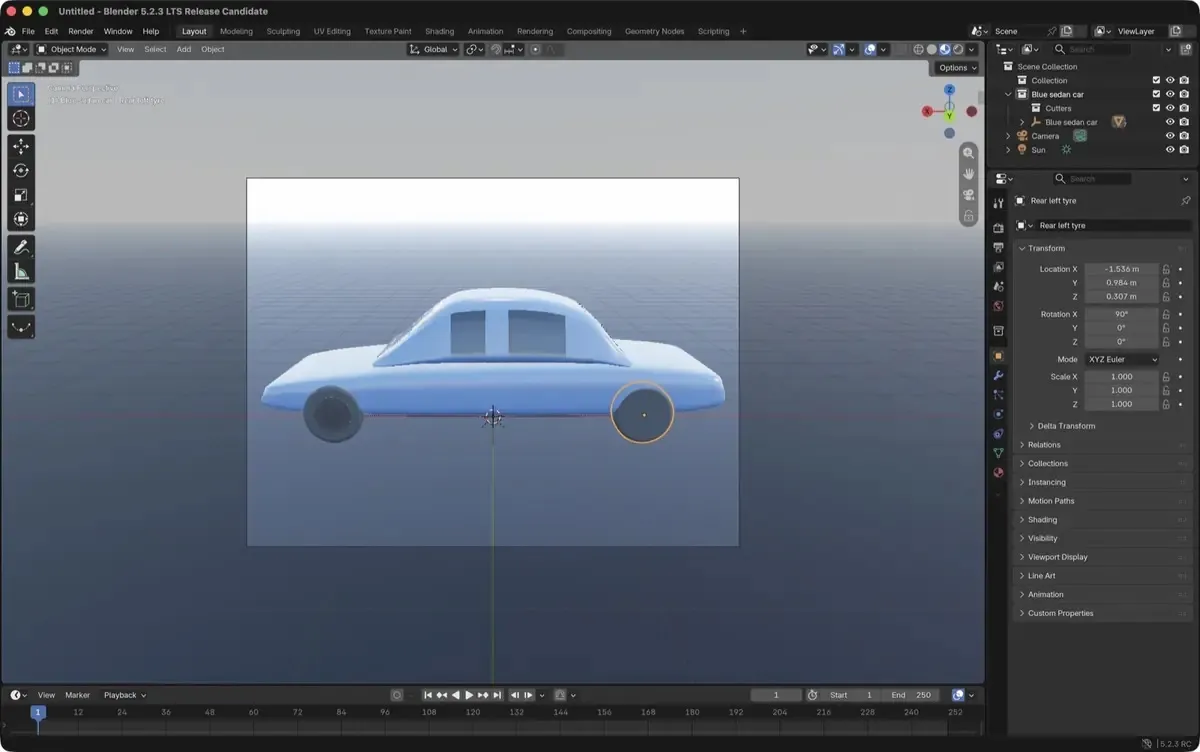
How it stays honest
Two pieces do most of the work.
A scene description sits between the models and the app. The scene is a typed format, for stills or motion. In these runs its structure (native text, vector shapes, image slots) is declared before any pixels exist. The image model only fills the image slots, and the vision model only checks them. Fixed adapter scripts compile the scene into each application, and each script is pinned by its hash: a test fails if a script changes without its evidence being rerun.
Verification renders a reference and compares. We render the scene ourselves, then compare the application’s output pixel by pixel and structure by structure: layer kind, order, text, font and bounds. “99.99% of pixels within tolerance” is a measurement.
A policy engine sits around every write. An approval is bound to the exact plan and works once. Before writing, a run re-inspects the document and stops without writing if it changed since the plan was made. Each operation leaves a receipt, written before and after the change. In the title-card run, a layer standing in for a person’s annotation came through three edits byte for byte unchanged.
What’s still open
Blender applies no font kerning, so one headline that fits its box in Photoshop wraps in Blender. We recorded it as a failure rather than widening the box to make the check pass.