Levvn is a property management and short-term rental marketplace built for Symple Leases Inc. Landlords, property managers, short-term rental hosts, renters and service pros each get their own hub, sharing one account, one inbox and one payments system: leases and rent collection, bookings and turnover tasks, maintenance, inspections, quotes and invoices. Levvn was called Symple Leases until a rename in September 2026, and sympleleases.com now redirects to getlevvn.com. The web app is live, with an AI assistant and an MCP server so agents can act for a user under the same rules. iOS, Android and desktop apps are built but not released yet.
The problem
Renting out a home involves many people. There’s the owner or host, a property manager, the renter, and the cleaners and repair pros who keep the place running. Levvn’s About page says each of them “rely on separate systems that don’t talk to each other.”
The client is Symple Leases Inc., which runs Levvn. The first spec, written in March 2026, asked for one platform for all of them: “a multi-sided property management and STR marketplace platform with 7 role-based dashboards, Stripe Connect payments, and subscription-gated features.”
What we built
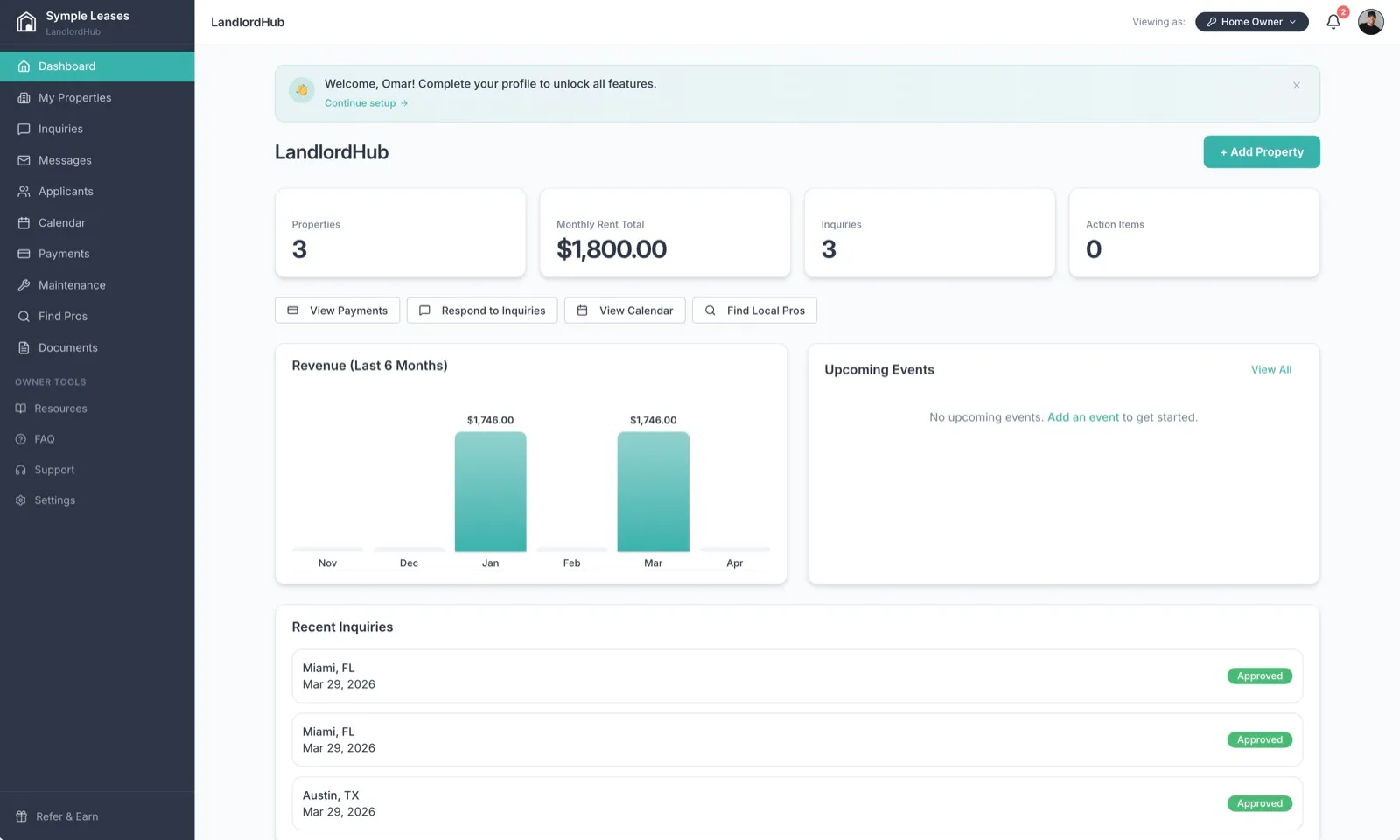
Everyone signs up with a role and gets a hub built for it. One person can hold several roles and switch with “Viewing as” in the top bar without signing in again.
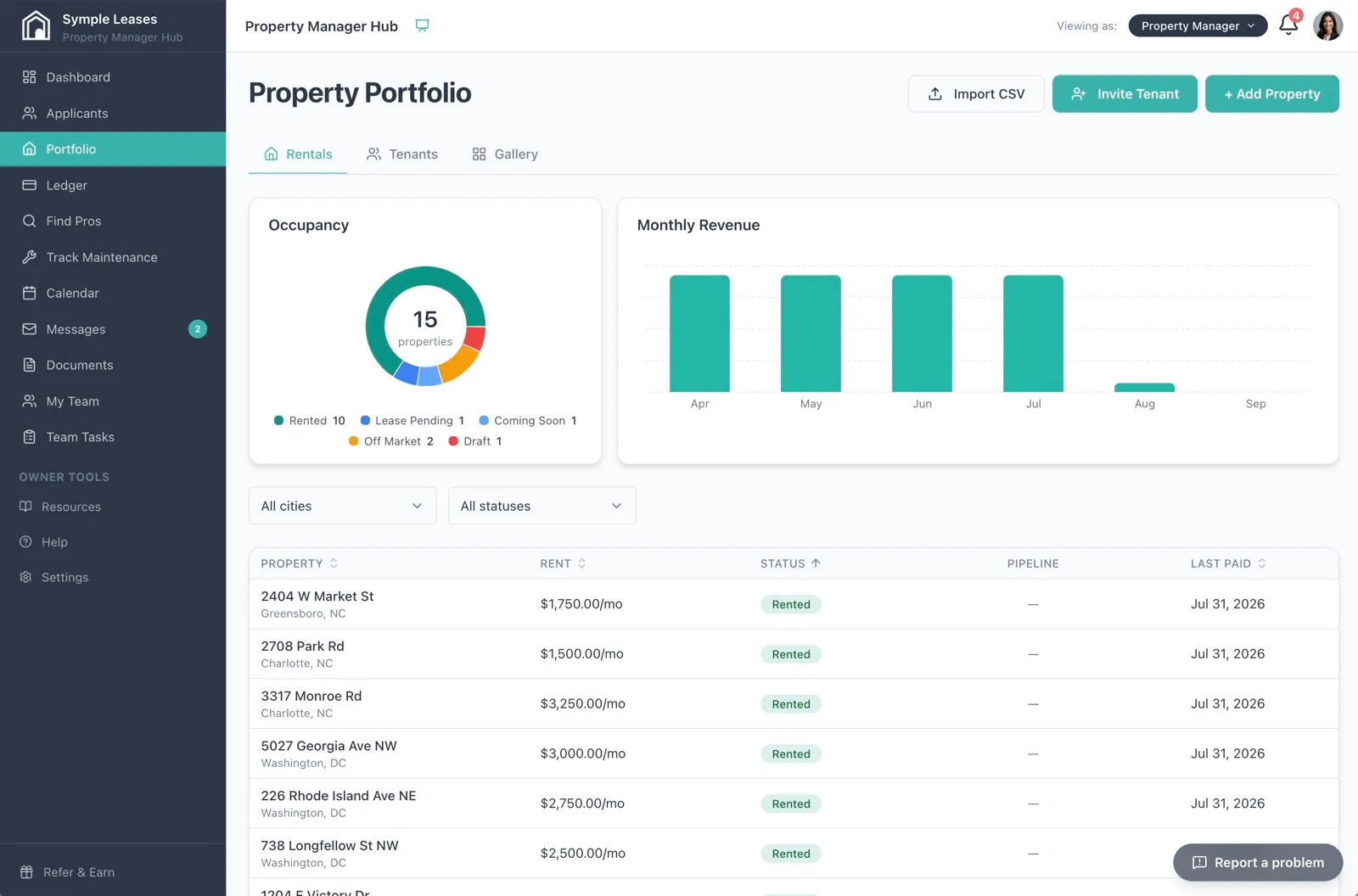
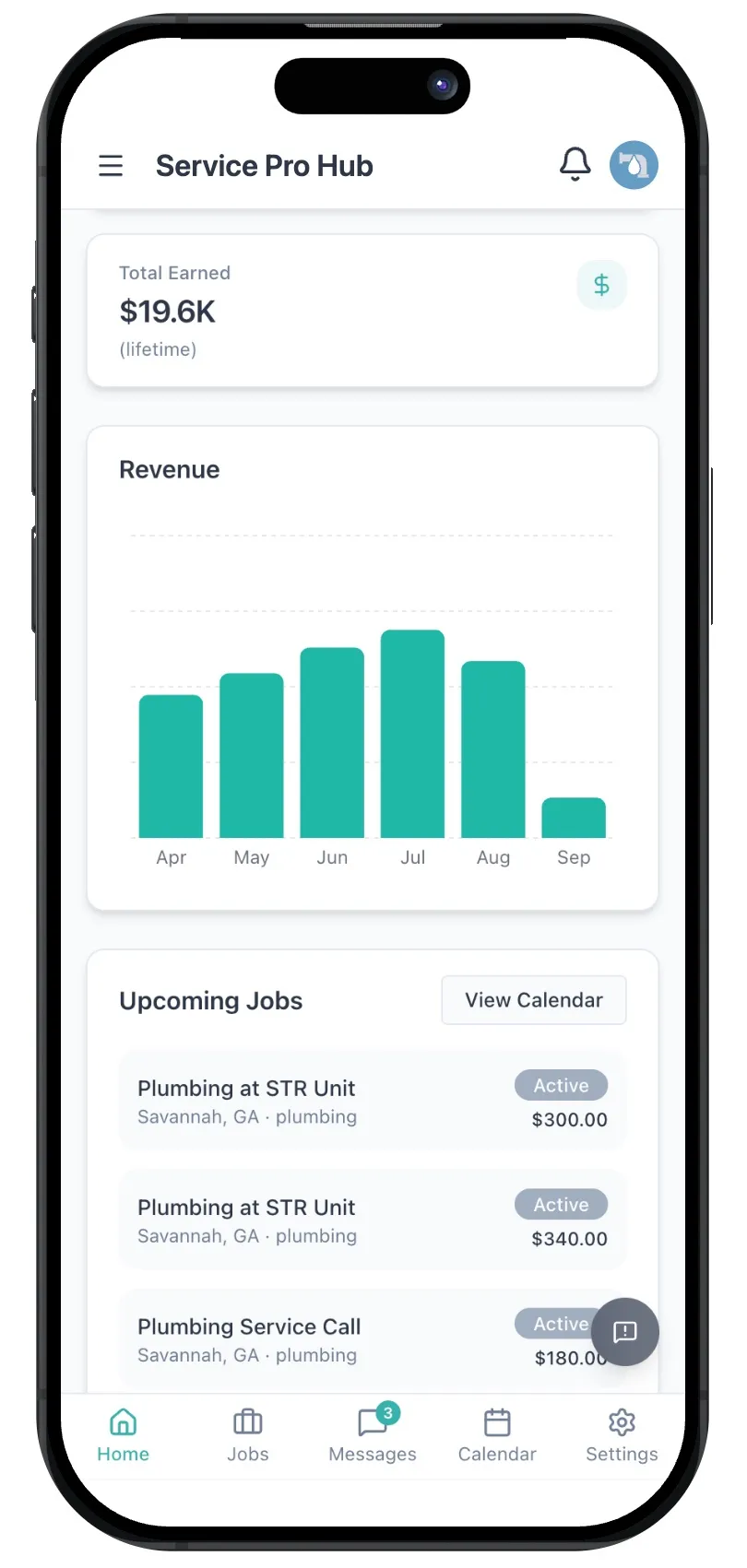
Landlords list properties, answer inquiries, turn approved inquiries into leases and collect rent online, with autopay. Property managers get unlimited properties, CSV import and team seats. Hosts sync their booking calendars over iCal, assign turnover tasks with checklists and photo proof, and book guest experience inspections. Service pros get a public profile, a place in the Find Pros directory, a job board, quotes, invoices and payouts. Renters pay rent, and homeowners can pay a pro’s invoice without a landlord account.
Everyone shares one inbox with real-time delivery, voice notes and push notifications. The Levvn Assistant can do anything the user can, by chat or by voice. Outside agents such as Claude or ChatGPT can do the same through an MCP server or a REST gateway, after the user connects them with OAuth.
The same backend serves an iOS and Android app built in Expo, and a Tauri desktop app for Mac, Windows and Linux.
How we built it
Work started on March 28, 2026 from a Spec Kit template. The Phase 1 spec breaks the platform into user stories with acceptance scenarios, and its task list has 124 of 126 items checked off. Symple Leases supplied journey specs for each role, plus a payment map.
CLAUDE.md sets the rules every change follows. Money is stored in integer cents. The transaction ledger is append-only. Every API route checks the role. Notifications go out as Inngest events, never from inside a route handler. 837 of the 874 commits on main were written with Claude Code. Two developers did the work, and all 539 merged pull requests went into main.
CI runs lint, type checks, the Vitest suite and a Storybook build on every PR, and type checks, lint, Jest and Expo Doctor for the mobile app. Merges to main deploy to production on Vercel, and the staging branch deploys to beta.sympleleases.com. Some tests exist only to catch drift. One fails if the mobile app’s copies of roles, formatters, feature flags or password rules stop matching the web’s. Another fails if a new API route has no risk label for agents.
The rename came six months in. The customer-facing product became Levvn in late September 2026. The company, the repo and most vendor accounts kept the Symple Leases name.
What was hard
Money that several people touch. Rent, job payments, subscriptions, payouts and refunds all go in one ledger. Rows are only ever added, never changed or deleted. Closing an account stops new payments: subscriptions are canceled and autopay is turned off. But the saved payment details are kept, because money may still be owed. The closure screen lists what is still owed, with amounts, before the person confirms. Deleting an account erases personal data and keeps the financial records with names removed.
Letting agents act for people. The MCP server, the REST gateway and the in-app assistant all go through one function. That function calls the real API handlers as the user, so every role check applies unchanged. Each endpoint is labeled read, write, destructive or financial. Destructive and financial actions wait for the user to approve them in Levvn. Door codes, Wi-Fi passwords, account numbers and tax IDs are removed from anything an agent sees. Assistant use is charged in credits worked out from real token counts.
Keeping the database in step. Schema changes reach production by hand with prisma db push, not through CI. In early October we found that db push had been quietly dropping the generated column that message search relies on. The fix (#228) put the column in the schema so db push leaves it alone. A daily job now compares the production database with the schema and opens an issue if they differ.
By the numbers
- 874 commits on main from March 28 to November 19, 2026
- 539 merged pull requests from two GitHub accounts
- 11,507 tests passing in 775 Vitest files in the latest CI run on main, plus 174 mobile test files
- 138 database models and 475 route handlers under
/api/v1 - 13 user roles, from landlord and host to field team, inspector and staff
- 307 Storybook story files and 171 developer docs pages
- Web app in 4 languages; App Store listing written in 50
Where it is now
Levvn is live at getlevvn.com, and sympleleases.com redirects there. Landlord accounts and service pro profiles are free, and hosts and property managers choose a paid plan.
The iOS and Android apps are built but not in the stores yet. App Store rules say digital goods sold inside an app must use In-App Purchase. So the apps show plan and credit status only, and plans are bought on the web. Rent and other real-world payments still go through Stripe in the app. The desktop app’s download page says “Coming soon.”
The same organization also builds VIP Guest Guide, a separate guest guide app for short-term rental hosts and their guests.