M1rror is a collaborative design workbench. A team collects references, M1rror builds a design system from the team's own code, everyone reviews and approves real renders, and a coding agent ships the approved change as a scoped pull request. It is organized into six modes (Board, System, Screens, Code, Review, Ship), with a design agent alongside every mode and an MCP server for external coding agents. Approvals bind a SHA-256 digest of an immutable target, and approved, implemented, tested and merged are tracked as separate states.
The problem
AI-assisted development often ships working features with no coherent visual language or maintainable component system. M1rror is for founder-builders, product engineers and small agency teams who have a rough but working app and no reliable way to get from “I like these interfaces” to “our app implements one clear system.”
A mockup looks like the app but isn’t tied to its real components. An AI redesign may touch code it has no business changing, and its claim of “done” is hard to check.
What we built
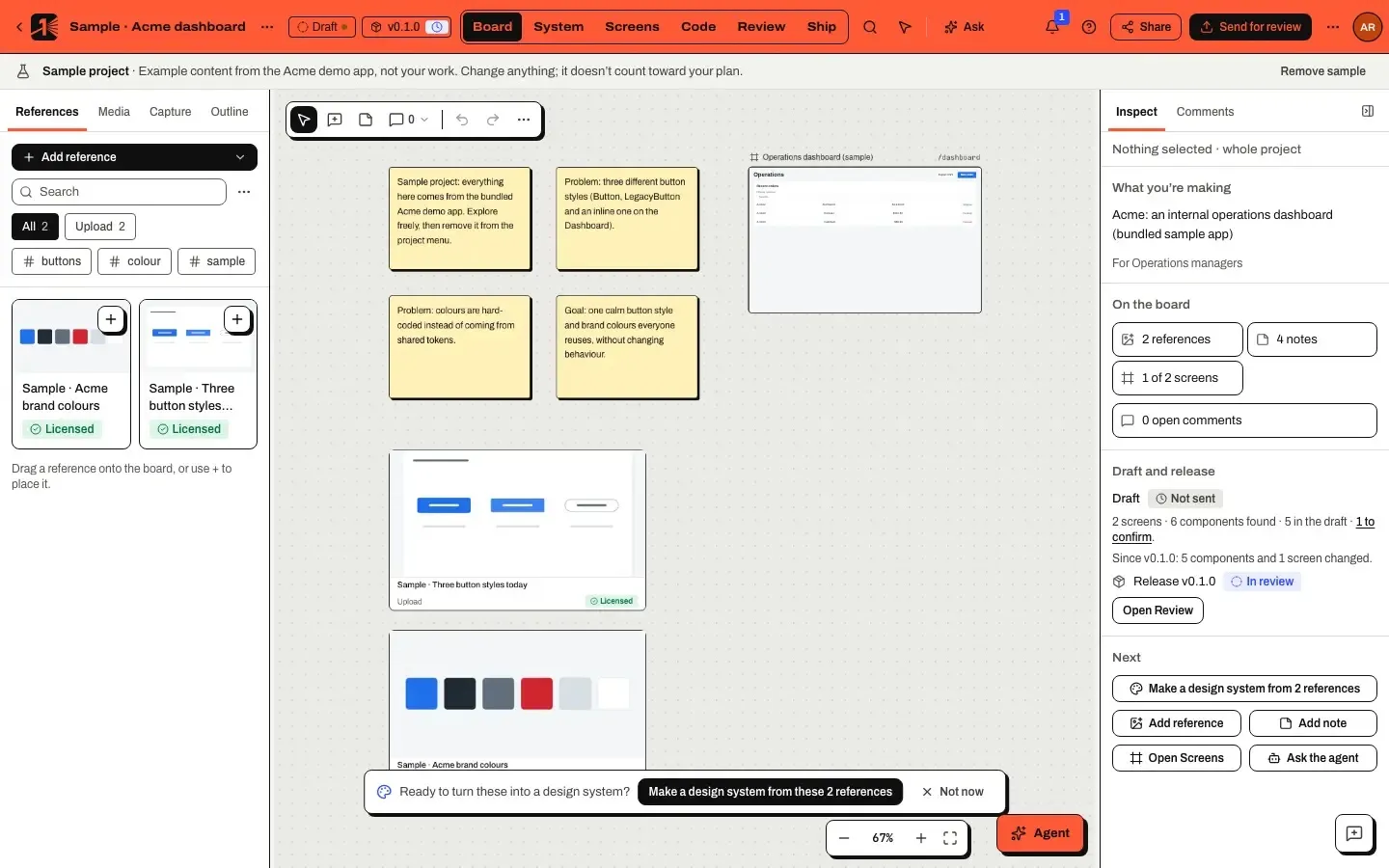
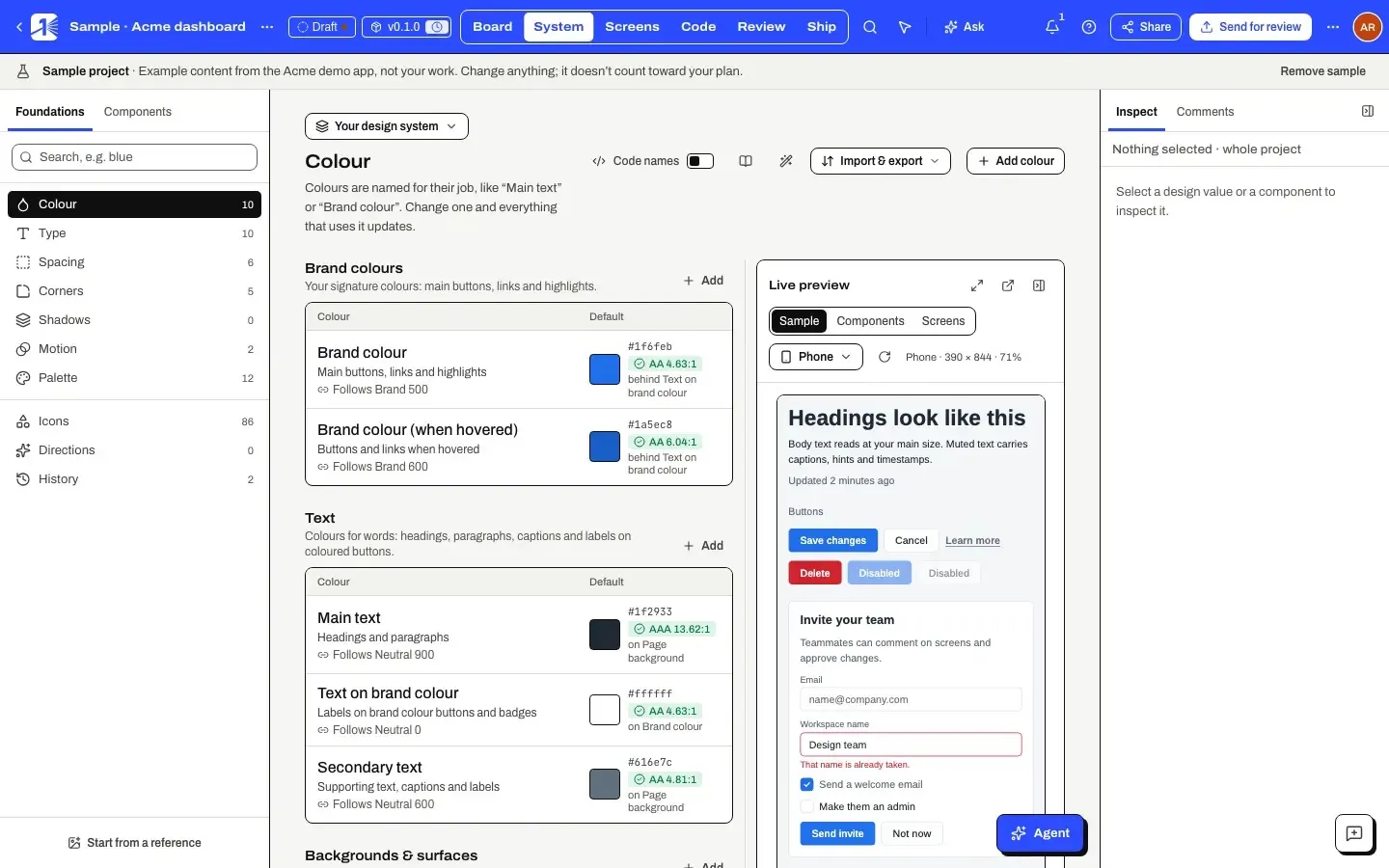
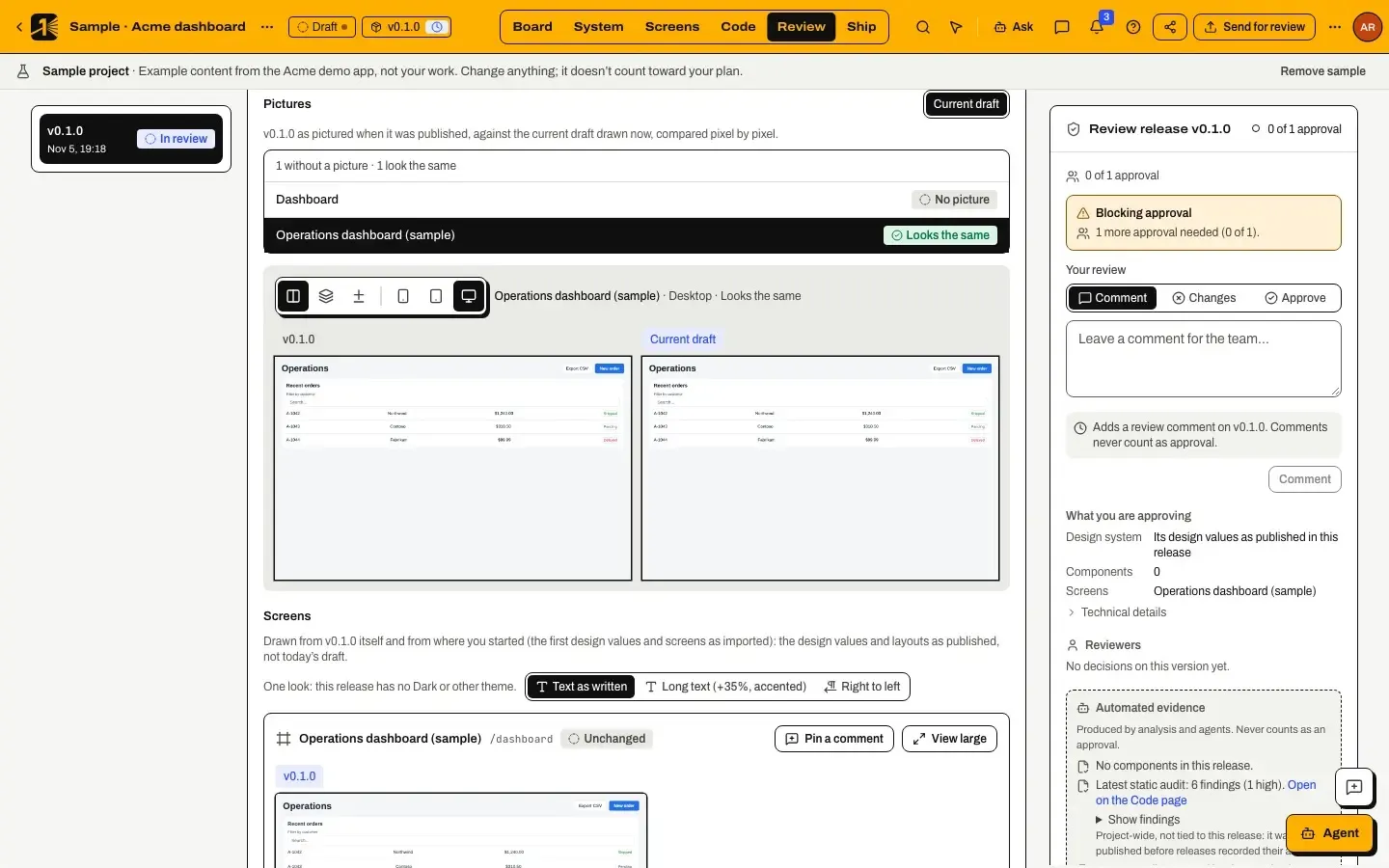
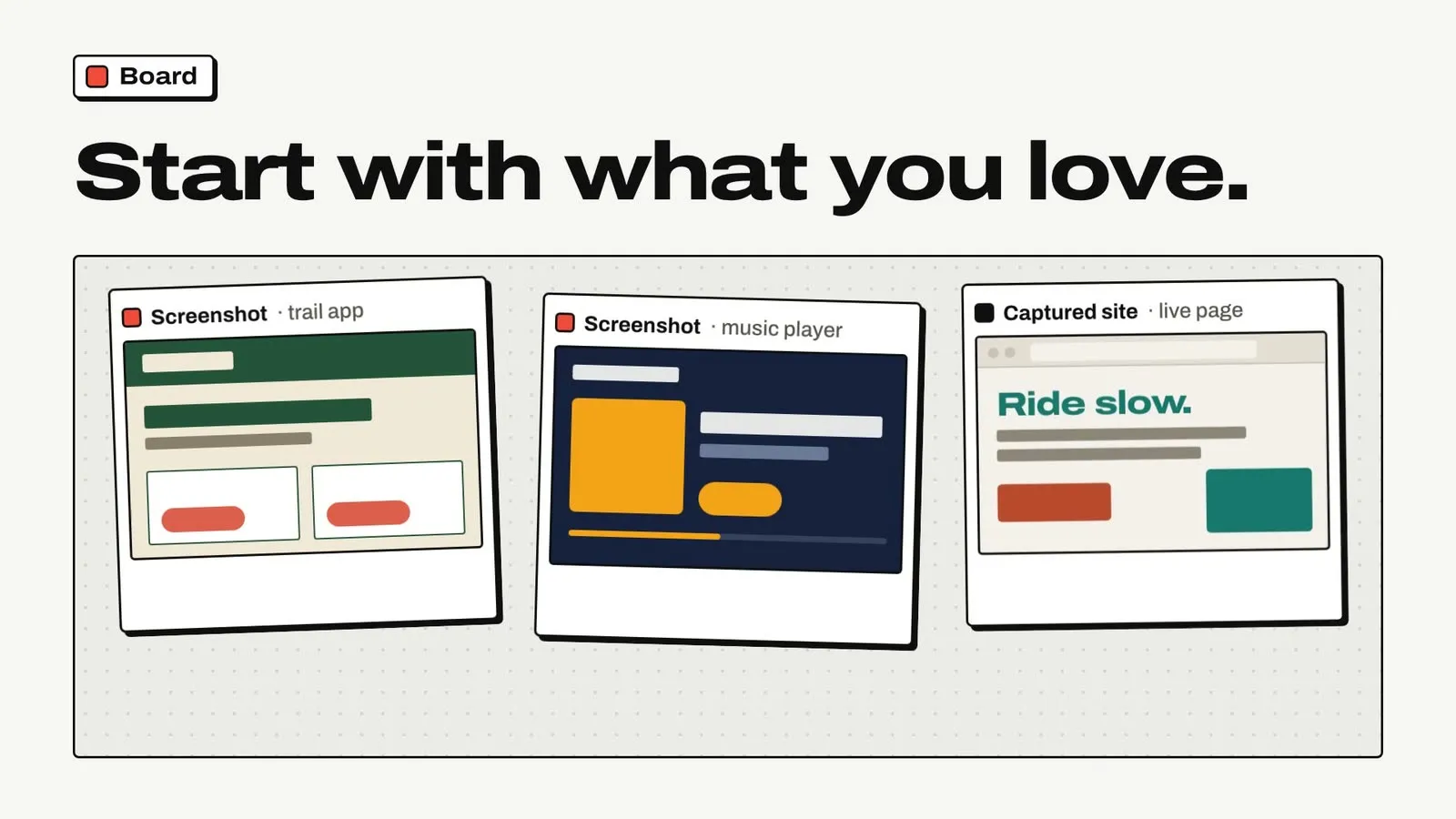
M1rror is one project shell with six modes. Board collects references: captured sites, images and apps. System starts tokens and components from the repository’s own code, with contrast checks. Screens designs every size and state with the team’s real components. Code shows, in plain words, where the repository drifts from the design. In Review, teammates and guests comment on and approve real renders. Ship turns an approved release into a scoped pull request with checks and evidence. A design agent works alongside every mode and asks before it spends credits.
Underneath:
- One governed action layer. The web app over REST and coding agents over MCP call the same policy-checked actions.
- Approvals bind a SHA-256 digest of an immutable release, and approved, implemented, tested and merged are separate states.
- Long work runs as durable Postgres-backed jobs with usage reservations, cancellation and idempotent handlers.
- Implementation runs work in a disposable git worktree with a scrubbed environment, a time limit and allowed-path enforcement, and open PRs through a GitHub App.
- Visual changes never authorize changes to business logic, payments, data models or auth.
How we built it
We started with a 25-document kickoff pack: requirements, JSON Schemas, an OpenAPI contract, a machine-readable requirement register and staged prompts for the build agents. Contracts came before parallel work. Each PR names the requirement IDs it covers, and a requirements matrix records evidence. A requirement is never marked verified without a test or a command someone ran. An audit document records every departure from the pack.
Agents wrote most of the code, guided by a CLAUDE.md engineering guide, each in its own worktree with one integration owner.
GitHub Actions could not run on this account, so a local CI script runs the same jobs: a throwaway Postgres container, Playwright inside the pinned CI image, secret and dependency scans. A pre-push hook runs the fast pass, and the full summary goes into the PR. Visual regression tests compare seven main screens in light and dark, desktop and phone. Code-owner review covers contracts, permissions and migrations.
We also ran drills: scripted journeys that use the product as a person and as an agent, then file one issue per problem against the commit tested.
What was hard
Keeping an approved change inside its scope. A drill found the implementation planner rewriting every deprecated button it found, including a file outside the approved paths. The run failed and was still billed. We limited the planner to the allowed paths, and a run the policy stops is no longer billed.
Making the product readable to agents. Drills found that none of the 142 MCP tool descriptions said when to use the tool, 38 tool names broke the naming convention, and one inventory tool returned a whole repository snapshot in a single result. We fixed all three.
Pixel-stable screenshots. Fonts render differently on macOS and Linux, so laptop baselines fail in CI. We commit only Linux baselines and pin everything that changes pixels: scale, locale, time zone, motion and Chromium’s font flags.
By the numbers
- 190 merged pull requests, 177 into
mainand 13 into the v0.1 platform branch - 179 commits on
main, 163 of them co-authored by Claude - 8 apps and 9 packages in one monorepo
- 627 test files, including 114 Playwright specs
- 40 committed visual baseline screenshots
- 12 sample projects used as end-to-end fixtures
- 4 days from first commit (October 29, 2026) to the v0.1 platform merge (November 2)
Where it is now
M1rror is live at m1rror.com with a free plan. Paid plans are at pilot pricing, with Stripe in test mode. Implementation runs are labeled as local isolation, not yet qualified for untrusted code, so only the bundled sample and repositories an owner connects can run.
Next: a Review page that shows reviewers exactly what they are signing off, React Native support, and a desktop companion for local repositories.
A 20-second tour of M1rror's six modes