Writing / Process ·
Agents build, people decide: how we run a project
Coding agents write most of our code. Here is where a run stops and waits for a person, and how we make those stops quick enough that nobody skips them.
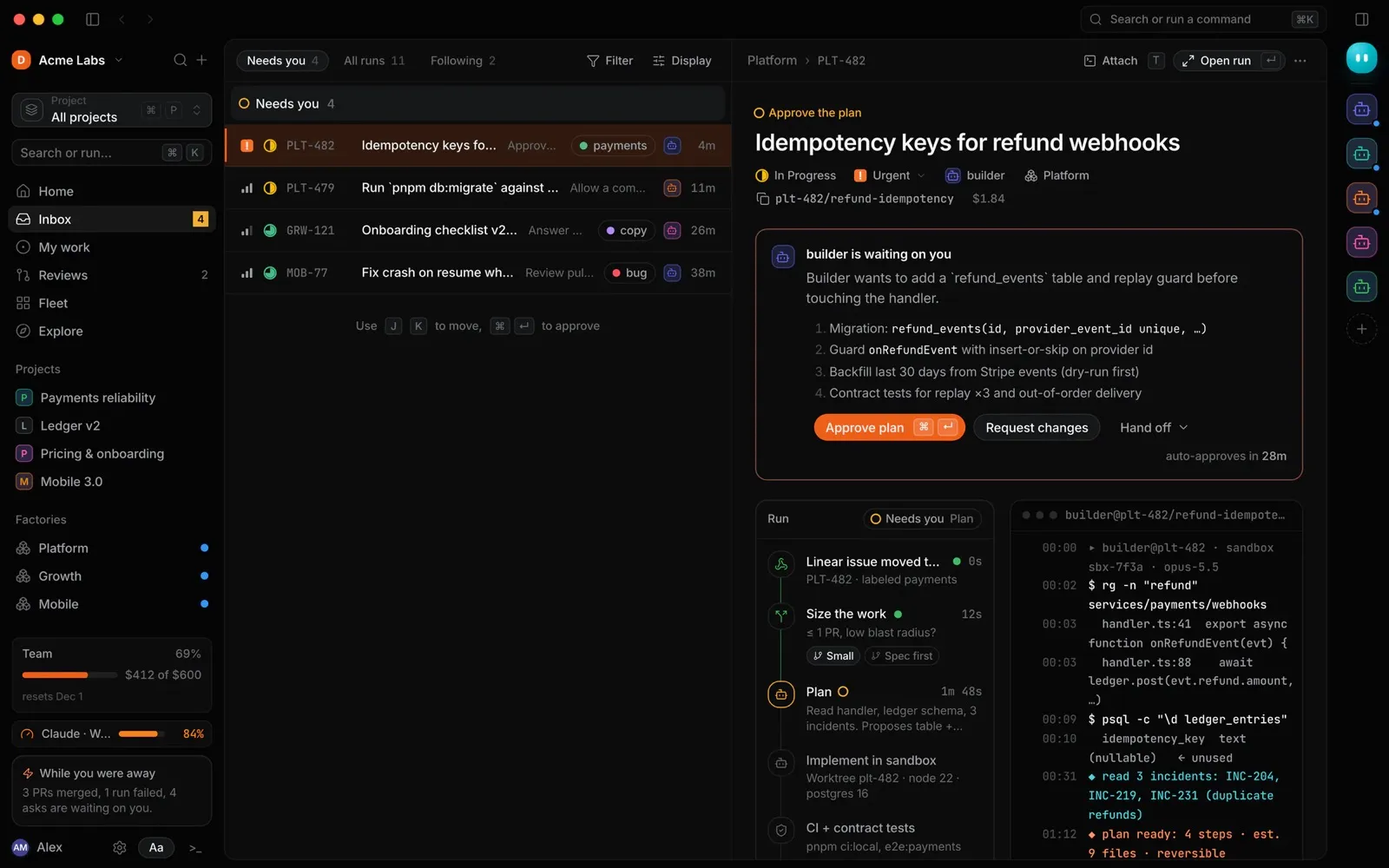
Coding agents write most of the code we ship. Across four of our current repositories, more than nine in ten commits are co-authored by one. That isn’t the interesting part anymore. The interesting part is deciding where a person has to be and making those moments cheap enough that nobody skips them.
The short list
In Duun, our software factory, a run stops and waits for a person at these points:
- The plan. The agent proposes a plan, and a person approves it before the build starts. A bad plan is the most expensive mistake an agent can make.
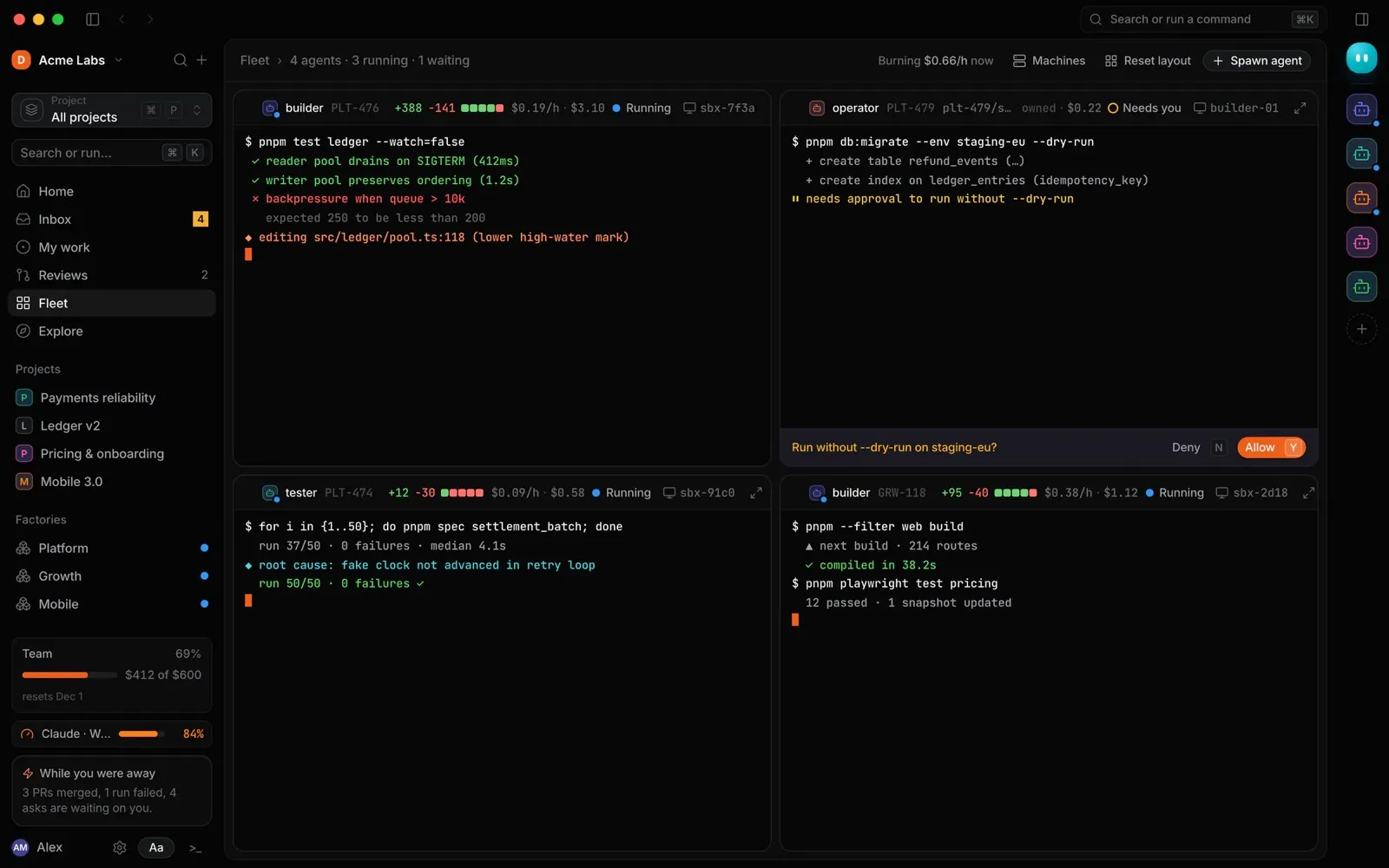
- Risky commands. When a command or tool call matches a rule that says ask, the run pauses and shows the call, what it would change and which rule stopped it.
- Secrets and credentials. A run asks before it uses one.
- The merge. Every pull request has to pass CI. In Duun, routine agent pull requests merge once CI is green, and anything touching security-sensitive paths waits for the code owner’s approval.
Everything else in the build loop (building in a sandbox, running the checks, pushing and opening the pull request) runs on its own.
- Planwaiting for youapproved
- Buildagent workingdone
- Risky commandrule says askapproved
- Secretasks firstapproved
- CI checksrunningpassed
- Mergemerged
Making the moments cheap
A person-in-the-loop step that takes ten minutes of context-gathering gets skipped. So the work comes to the person already prepared:
- One inbox. In Duun, plans, risky commands and pull requests that need review all land in one queue. A plan waits next to the run timeline and live terminal, and you approve with one key, or from Slack.
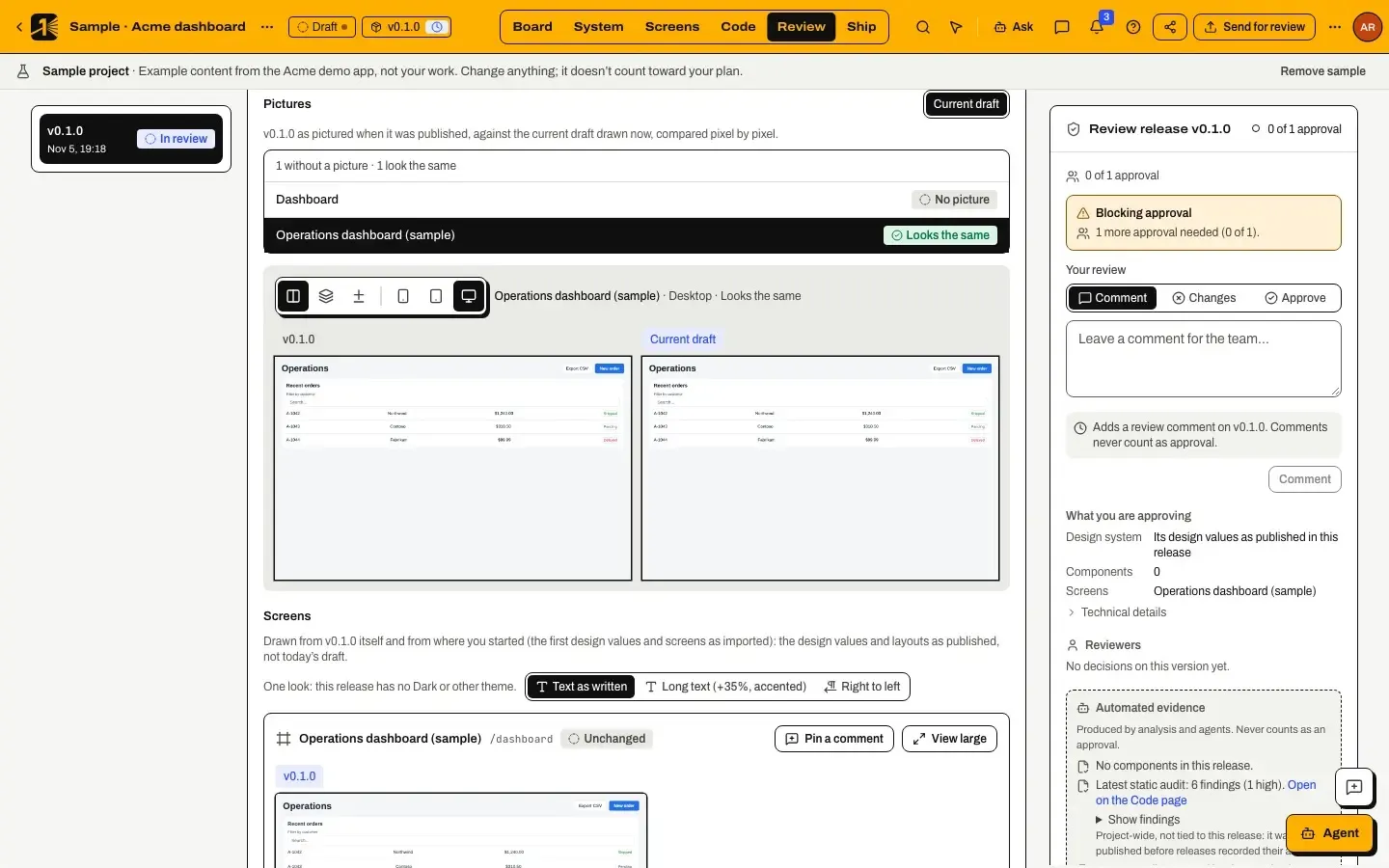
- Real pictures, not descriptions. In M1rror, a design change is reviewed as rendered screens. An approval binds a SHA-256 digest of exactly what was reviewed, and the implementation run checks that digest again before it starts, so what ships is what was approved. Visual changes never authorize changes to business logic, payments, data models or auth.
- A cost before the run. In Duun, every run shows an estimate before it starts, a live cost meter while it runs, and hard caps per run, factory and team.
What you get as a client
A spec you approve before anything is built, a person on every risky change, and evidence for each claim at handover.